The post Communicating a Key Health Issue in Mexico appeared first on GLOBALHealthPR.
]]>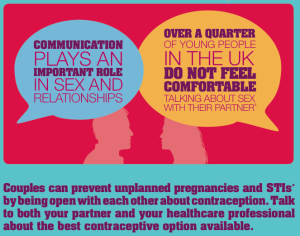
Sample of Bayer Health Infographic from last September’s World Contraception Day
In Mexico, one in two sexually active females aged 12 to 19 is pregnant. This forever alters these young women’s lives as well as the dynamics of their families. Among many issues they face, pregnant teens risk dropping out of school, increases in poverty levels, perpetual low-income jobs and, in most cases, an increased possibility of getting pregnant again in the following years.
To combat this and empower women faced with this situation, PRP helped to bring together medical specialists and non-governmental associations (NGOs) such as the Mexican Foundation for Family Planning (MEXFAM) and the Mexican Institute of Sexology A.C (IMESEX), at an event hosted by Bayer Women’s Health on World Contraception Day (WCD), held every year in September.
The key message: Having a life plan and sexual health education that includes access to contraception and treatment compliance are essential to reduce the incidence of teenage pregnancy.
Young people represent a vulnerable population. Just when their professional lives are supposed to be rising, they are also at greatest risk for unintended pregnancy. But still, talking about sex with young people is not usually dealt with openly; a third of the youth in the world don’t talk about contraception with their current partner before having sex, and just a few parents talk about the subject with their children.
There is a wide body of evidence linking sexual education programs in schools to increases in contraceptive use and decreases in pregnancy rates among adolescents. Thus from a scientific perspective there is no reason to separate counseling from sex education; these should be closely linked to prepare young people for the transition to adulthood.
Today, it is crucial to strengthen sexual and reproductive health among Mexican youths, while also letting them know that responsible health decisions are the start to achieving their professional and personal aspirations as adults. This is how we break the statistics of teenage pregnancy.
Our role as communicators and public relations professionals is to become a content multiplier with a strong commitment to accurate and objective information that, with the help of specialists, will influence positively parents and teenagers through media outlets.
When young people incorporate a culture of prevention into their daily discourse, they become responsible individuals. As a consequence they become receptive and know what to do with the information they receive. In this case study, modern contraceptives are highly effective, but only if used correctly, timely and in a consistent manner.
Communications is one of the most important ways to educate and allow the creation of successful young generations, ones that will be informed, responsible and engaged with their future.
The post Communicating a Key Health Issue in Mexico appeared first on GLOBALHealthPR.
]]>The post Pharma Communication in Mexico Changing According to Market Needs appeared first on GLOBALHealthPR.
]]> The global pharmaceutical industry is experiencing important changes. Among them, the loss of patents to major blockbusters, the arrival of biosimilars and, more importantly, a new scene regarding regulatory issues. With respect to the latter, Mexico has gone through many changes. We are not the only ones; it’s something we’re seeing in many countries around the world. Because of this, strategic creativity and a renewed focus communication campaigns have become a must.
Mexico is the second-largest pharmaceutical market in Latin America, with a 15% share of the region and an estimated value of $190 billion pesos ($14.8 billion USD) in 2011. The picture in the pharmaceutical sector in the region is encouraging, as expected sales in Latam are expected to surpass the $1.2 billion mark in 2016.
According to IMS Health, 40% of the Mexican pharmaceutical market is led by the brand-name innovations from private-sector firms, verus 18% from government-owned institutions. However, generics account for a 42% share currently. This “generics revolution” is going strong and increasing significantly. Newly-approved generics, which offer an average per-product savings of 60%-90 on average to the consumer, amount to an estimated net savings of around $14 billion over the next four years. This is a profound change.Many of these industry changes are strongly driven by public policy. In the last 3 years, important changes on health legislation improved by the Federal Commission for Protection against Health Risks (COFEPRIS), the highest regulatory authority in the national health field. Changes include advertising and generics (regarding market access policy), among others. In an attempt to streamline its processes, COFEPRIS has also reached equivalence agreements with the FDA and Canada on devices, meaning that if a product is approved for use in the US or Canada it is also approved in Mexico. In a similar manner, COFEPRIS now sets the standard for other Latin American nations.
Regarding the “generics revolution” from October 2011 to October 2012, COFEPRIS released 25 patents of active substances, which could license up to 181 new generic products. These include Lipitor, for cholesterol; Viagra, for erectile dysfunction; Zyprexa, for schizophrenia; Singulair for asthma; Plavix, for thrombosis; Diovan for blood pressure, Lexapro for depression, and Taxotere, to treat certain cancers.
According to experts generic consumption will continue to grow with the release of patents and government’ support. This is why communication in healthcare must:
- Be aligned with the environment’s needs and changes.
- Have the ability to generate value on the drugs “access fight.”
- Redefine the role of all stakeholders and audiences to accomplish successful and accurate strategic communications.
- Promote value-added strategies that address public health needs regarding aging populations and growth in chronic diseases.
- Increase digital communication, as well as, social media tactics among all audiences.
The post Pharma Communication in Mexico Changing According to Market Needs appeared first on GLOBALHealthPR.
]]>