


Canada
Canada’s publicly funded healthcare system is often considered to be a source of national pride. While Canadians benefit from near-universal coverage of physician and hospital services, they are often left to pay out-of-pocket or rely on private insurance for prescription drugs dispensed outside of the hospital setting. Because regulations are divided between federal, provincial and territorial levels, disparities between public drug plans and unequal access to marketed products are major criticisms of this framework.
In addition to the tremendous repercussions for Canadians in terms of access and affordability, drug manufacturers are also faced with the significant challenge of navigating the complex and fragmented approval processes of multiple independent bodies for the pricing and reimbursement of pharmaceuticals. However, manufacturers equipped to manage this complex environment will find a competitive and attractive business landscape.
What is Reimbursography?
Reimbursography is GLOBALHealthPR’s local and global market access strategy programme for pharma companies worldwide. Continue reading for details on Canada’s key payer stakeholders, important points to keep in mind and implications for industry.
Canada’s Payer Stakeholders
- The Patented Medicines Prices Review Board (PMPRB) is the body responsible for regulating prices of all patented prescription and non-prescription drugs sold in Canada.
- The Canadian Agency for Drugs and Technologies in Health (CADTH) is an independent agency funded by federal, provincial and territorial governments. CADTH is a health technology assessment (HTA) agency that houses services including the Common Drug Review (CDR) and the Pan Canadian Oncology Drug Review (PCODR).
- CDR provides evidence-based clinical and economic information and expert advice to participating public drug plans (federal, territorial and all provinces except Quebec). While Ontario participates in CDR, certain products may also qualify for their own independent Rapid Review Process. With over 60 percent of the Canadian population living in Quebec and Ontario these provinces are incredibly important.
- Conseil du medicament is Quebec’s influential HTA body. It recommends drugs to be listed on the Quebec provincial formulary. Final decisions are made by Quebec’s Minister of Health. The formulary is published three times per year.
- The Ontario Ministry of Health’s Rapid Review Process applies when a new product will fill a significant unmet medical need, or the listing will result in significant savings for the province. A unique aspect of the Ontario Rapid Review Process is that submissions can be made before the receipt of Health Canada Notice of Compliance (NOC) authorizing the drug for sale within Canada.
Important Points to Keep in Mind
Health Canada is the federal health department responsible for approving new drugs. Health Canada releases a formal marketing and distribution authorization called Notice of Compliance or NOC following the satisfactory review of a new product submission.
Pricing and reimbursement are two separate considerations.
Pricing
Pricing approval for patented medicines is regulated by the federal government through PMPRB. While manufacturers are free to set the prices for their products in theory, the prices of patented medicines are monitored by PMPRB to ensure that prices are not “excessive”. The PMPRB assesses drug prices in accordance with the level of therapeutic innovation:
- Breakthrough – first to treat a particular illness effectively or address a particular indication effectively
- Substantial Improvement
- Moderate Improvement
- Slight/no improvement and line extensions
The prices of “breakthrough” drugs are pegged to the median ex-factory price for the same drug in reference countries. Pricing of other new patented drugs is managed via therapeutic price referencing. Prices are limited so that the cost of the therapy is in the same range as other patented drugs already on sale in Canada. Prices can never exceed the highest referenced price or increase by more than the consumer price index (CPI).
Reimbursement
Reimbursement prices are not set by the PMPRB nor does it enter into pricing arrangements with manufacturers. The reimbursement process is governed by a combination of federal, provincial and private drug plans. The result is that reimbursement criteria and prices can vary considerably between plans.
Manufacturers should evaluate the potential of accelerated market access via the Ontario Rapid Review Process. A positive decision can shortlist a drug on the formulary and serve as a positive reference to build momentum for the rest of Canada.
Private payers may cover all Health Canada approved drugs, establish their own formularies, or follow the public drug plan in their provinces. In Quebec, private insurers are required to cover at least all drugs listed in the provincial formulary. Many private drug plans ask for submission dossiers and specific requirements vary by plan.
Hospitals maintain their own formularies through Pharmaceuticals and Therapeutics Committees. Dossiers must be submitted to individual hospitals or hospital consortia.
Product listing agreements (PLA) tailored for unique product characteristics and payer concerns can help accelerate market access. These may be an option for overcoming negative CDR recommendations.
Implications for Industry
Due to the increased conversation around drug pricing, including price disparities between countries, there is pressure on manufacturers to maintain high list prices across a number of countries including Canada. Clinical trial data demonstrating successful outcomes and the unique health and economic value of a product can be used to convince highly skeptical HTA bodies in Canada and gain reimbursement at target price. Being well versed in the science and adept at communicating the story of your therapeutic value are necessary skills for achieving access in Canada.
The Canadian drug evaluation and reimbursement system has a high rejection rate. With more than 30 percent of the Canadian population directly affected by the CDR recommendations, a flexible and well thought out market access program is a must. There is more than one way to approach market access in Canada, and GLOBALHealthPR’s experienced team is adept at evaluating all available options to derive a strategy that can vastly increase the chances of success for a manufacturer.
for a complimentary 30-minute consultation
Blogposts

Spectrum’s Kaitlin Bowen Heads to Sydney for Part II of the 2016 GHPR Employee Exchange!
“One’s destination is never a place, but a new way of seeing things,” said American writer Henry Miller. And starting this week, I’ll be privy to an entirely new way of seeing things from the opposite side of the world in Sydney, Australia as a part of the 2016 GLOBALHealthPR® Professional Exchange Program with our partner, VIVA! Communications.

Will Germany’s Pharma Transparency Code Bring About a New Compliance Culture?
Today’s post comes to us from Philipp Dieterich, Strategy Expert at GLOBALHealthPR Germany partner, fischerAppelt.
Earlier this year, the German pharma association FSA implemented the Transparency Code, which means that for the first time all pharmaceutical companies in Germany have to publish all monetary contributions they have paid to medical institutions, doctors and other partners throughout the previous year. Technically speaking, this is not a challenging request. However, companies that carry out their duty and publish those numbers let go of the opportunity to establish a new compliance culture and shape communication around it.

Some final thoughts – GHPR Employee Exchange 2016
As the week and my GLOBALHealthPR Employee Exchange draw to a close in New York City, I can only describe the experience as amazing.
Every day has brought me brand new, exciting opportunities in which I have been able to uncover “The Spectrum Way” of working, meet with new friends and team members, and continue to build a relationship with my U.S.-based colleagues.

Arriving at Spectrum New York
Arriving in New York City on Sunday, I was immediately taken aback by the sheer size and volume of the place. It is a phenomenal city to behold. I was met and given a tour of the new office space, in Battery Park, close to the most southernmost tip of Manhattan Island and located on the 26th floor of a skyscraper, by Senior Vice President, GLOBALHealthPR at Spectrum, Tim Goddard. Tim gave me a tour of the very sleek, modern office, which offers a magnificent view over Battery Park, while also offering the chance to see the Statue of Liberty from the office balcony. Leaving the office, Tim took me to visit the 9/11 memorial pools, and museum, which, although a somewhat heavy experience, allowed me to get a real insight into how that tragedy has shaped the New York City of today. On Monday, I spent my first day in New York office, and was privileged to meet with many of the team, as well, as allowing me to participate in the BioPharma Monthly Team meeting, and to discover lots about the different brands and companies that the BioPharma team works with in the USA. And, later in the day, I had a phone call to discuss the Consumer Science Practice with Senior Vice President, Darby Pearson. Unlike much of the biotech and pharma-specific work done by Spectrum, the Consumer Science Practice focuses on telling the scientific story of certain consumer products. This was very interesting to discuss with Darby, and, I was able to offer my feedback and insight around some of the campaign ideas and suggestions that her...
Looking back on a packed first week in America’s Capital
As my first week representing VIVA! Communications, Australia as part of the GLOBALHealthPR Professional Exchange Program at Spectrum in Washington D.C. draws to a close, my head is spinning with all of the health PR-related information I’ve recently gleaned.
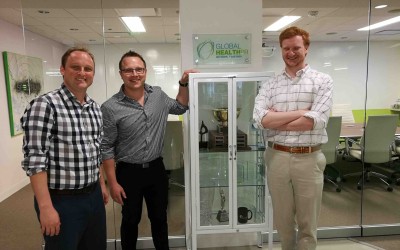
The 2016 GLOBALHealthPR Exchange is Underway! Week 1 – Washington, DC
The 2016 GLOBALHealthPR Employee Exchange is officially underway! Watch this space for updates on this one-of-a-kind program from now through November.