The post Needle-Free Vaccines on the Horizon appeared first on GLOBALHealthPR.
]]>Have needles got you dreading your next trip to the doctor’s office or hesitating to get that annual flu shot? If so, this new advancement in vaccine technology may change your mind.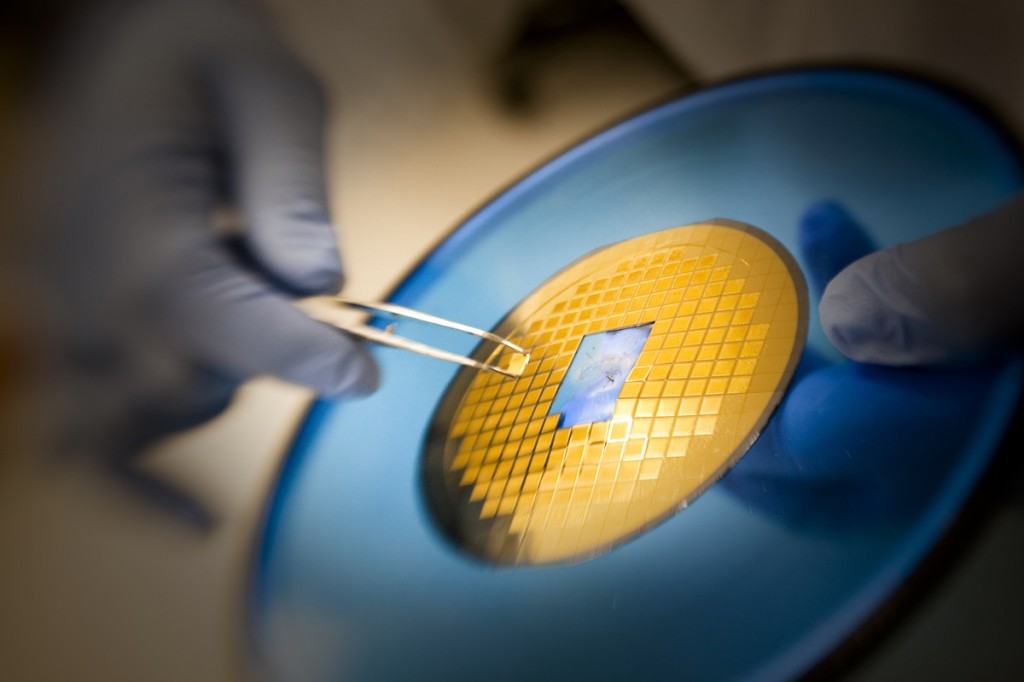
The Nanopatch is an innovative, needle-free alternative to the standard method of vaccine injection, currently being developed by the Australian vaccine company, CSL. These small patches can be placed on the skin, where the vaccine will be dissolved through high-pressure inoculation. The nanopatch is still in its trial stages at the moment, but if all goes well it could hit the market in the next five years.
Considering today’s declining immunization rates, the development of this cheaper, more efficient, and pain-free alternative to the standard vaccine is more important than ever.
To learn more about this exciting innovation, head over to our partner VIVA! Communications’ blog post on needle-free vaccines now!
The post Needle-Free Vaccines on the Horizon appeared first on GLOBALHealthPR.
]]>The post Male Anorexia Nervosa – M.A.N. appeared first on GLOBALHealthPR.
]]>
Image: bigsmiledental.com
Today’s post comes to us from our GLOBALHealthPR Australia partner VIVA! Communications.
With diagnoses on the rise, today we shed light on a condition society most frequently deems to be of concern to women and girls – anorexia nervosa. As you may know, anorexia nervosa is characterized as an eating disorder that affects its victims through obsessive fears of weight gain and obesity.
What you might not know is that despite being deemed a “woman’s disease” since the 1970’s, anorexia nervosa affects 1 in 10 males and recent studies even suggest an equal number of males and females suffer from the condition.
More surprisingly, anorexia in males seems to be increasing at a much faster rate than in females, though the treatment for the illness continues to be largely female- oriented. The Anorexia Nervosa Genetics Initiative (ANGI) has been working diligently to reduce the gender stigmatization associated with the disease, mostly by conducting studies to specifically pinpoint the genetic differences in those with anorexia nervosa, thus finding ways to treat men and women more effectively.
VIVA! is currently teaming with the QIMR Berghofer Medical Research Institute in Brisbane to recruit patients (men and women) for the Anorexia Nervosa Genetics Initiative (ANGI) – the world’s largest and most rigorous genetic investigation into the illness. The study aims to detect genetic variations that may play a role in this potentially life-threatening illness.
Head over to the VIVA! Communications blog post on male anorexia to learn more about this important initiative.
The post Male Anorexia Nervosa – M.A.N. appeared first on GLOBALHealthPR.
]]>The post Communicating a Key Health Issue in Mexico appeared first on GLOBALHealthPR.
]]>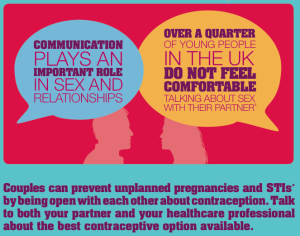
Sample of Bayer Health Infographic from last September’s World Contraception Day
In Mexico, one in two sexually active females aged 12 to 19 is pregnant. This forever alters these young women’s lives as well as the dynamics of their families. Among many issues they face, pregnant teens risk dropping out of school, increases in poverty levels, perpetual low-income jobs and, in most cases, an increased possibility of getting pregnant again in the following years.
To combat this and empower women faced with this situation, PRP helped to bring together medical specialists and non-governmental associations (NGOs) such as the Mexican Foundation for Family Planning (MEXFAM) and the Mexican Institute of Sexology A.C (IMESEX), at an event hosted by Bayer Women’s Health on World Contraception Day (WCD), held every year in September.
The key message: Having a life plan and sexual health education that includes access to contraception and treatment compliance are essential to reduce the incidence of teenage pregnancy.
Young people represent a vulnerable population. Just when their professional lives are supposed to be rising, they are also at greatest risk for unintended pregnancy. But still, talking about sex with young people is not usually dealt with openly; a third of the youth in the world don’t talk about contraception with their current partner before having sex, and just a few parents talk about the subject with their children.
There is a wide body of evidence linking sexual education programs in schools to increases in contraceptive use and decreases in pregnancy rates among adolescents. Thus from a scientific perspective there is no reason to separate counseling from sex education; these should be closely linked to prepare young people for the transition to adulthood.
Today, it is crucial to strengthen sexual and reproductive health among Mexican youths, while also letting them know that responsible health decisions are the start to achieving their professional and personal aspirations as adults. This is how we break the statistics of teenage pregnancy.
Our role as communicators and public relations professionals is to become a content multiplier with a strong commitment to accurate and objective information that, with the help of specialists, will influence positively parents and teenagers through media outlets.
When young people incorporate a culture of prevention into their daily discourse, they become responsible individuals. As a consequence they become receptive and know what to do with the information they receive. In this case study, modern contraceptives are highly effective, but only if used correctly, timely and in a consistent manner.
Communications is one of the most important ways to educate and allow the creation of successful young generations, ones that will be informed, responsible and engaged with their future.
The post Communicating a Key Health Issue in Mexico appeared first on GLOBALHealthPR.
]]>The post Health Fads From The Year That Was appeared first on GLOBALHealthPR.
]]>
Image: telegraph.co.uk
As 2014 draws to a close, there’s no better time to reflect on various ‘health fads’ from the year that was.
2014 was a weird, wacky and wonderful year of health trends ranging from “pop-diets” and the gluten-free craze, through to the advent of ‘food activating’. One thing is certain: all are big business.
Team VIVA! Found the top ‘fads’ of 2014 were:
- Tough Mudder and similar super-duper obstacle and fitness challenges
- Food activation
- Going gluten-free
- Pop-dieting
- Wearable technology
- Green drinks
Wishing you a happy, healthy and safe 2015 from all of us at GLOBALHealthPR!
What trends and fads emerged in your country in 2014?
The post Health Fads From The Year That Was appeared first on GLOBALHealthPR.
]]>The post Dilemmas Over the Approval and Delivery of New Health Technologies in a Fragmented and Inefficient System appeared first on GLOBALHealthPR.
]]>
A roadmap to health system efficiency?
Image: G. Novick presentation
In today’s post, Eugenia de la Fuente of GLOBALHealthPR Argentina partner Paradigma PEL Comunicación explains why Argentina needs a uniform health technology assessment process – and why the media should take notice of the issue.
There is no doubt that advances in health technology have provided tremendous benefits to patients. In Argentina, patients have pursued access to innovative treatments through court actions, which have been increasing in frequency along with each new drug approval and diagnosis method.
This creates a lack of uniformity in how treatments are covered and delivered, and demonstrates that health systems throughout the world should use caution when deciding which technologies to cover and, perhaps more importantly, how to bear the expenses which will inevitably follow a given decision.
To put what is happening in Argentina into context, Dr. Gabriel Novick, former Undersecretary of Health Planning of the City of Buenos Aires, recently gave a talk to a group of healthcare journalists. “One must consider which technology the country needs, who it is for, and how it should be approved, because the scope of the issues that make the newspapers’ front pages is limited. When healthcare is discussed, the media agenda covers only an infinitesimal part of the story in Argentina, and usually only takes an interest in socio-health problems,” said Dr. Novick after showing a scribbled image designed to illustrate the Argentine health system. “Within this framework, coverage of the technology assessment process is negligible,” he said.

Current HTA process in Argentina: multiple ways to score, but which points really count? Image: S. Chalmeau, a/LTA via mymodernmet.com
However, Novick, now the Corporate Medical Director of Swiss Medical Group (which offers private healthcare to about a million members) elaborated further. He went on by saying that in spite of the aforesaid, there are three elements that add significance to the topic: “New technologies appear throughout the country on a continuous basis. These technologies are poorly assessed. All this occurs in an inefficient socio-health system that,” he pointed out, “generates a complex cocktail that has a vast systemic impact. This is why this issue is so important.”
Under the title “Assessment and impact of new technologies in the current health care context in Argentina,” the expert made a short review of the local healthcare situation, quoting, to begin his speech, a phrase from the Report on Oncology in Latin America published in 2013 in The Lancet Oncology: “The lack of integration of the health system of Argentina results in poor access for people.”
Social “security” and coverage confusion
In Argentina, social security does not have the same meaning as in other countries. For example, in Mexico there is the Social Security Institute, a single system to which everybody contributes part of their income. The healthcare system is not fragmented into a large number of health plans, some of which are more solvent than others. In Argentina, health plans are just a segment of social security. This is the reason why the dispersion is so significant, explained Novick. He went on to present data that reflect this fragmentation, which has turned Argentina into a study case worldwide:
- 62% of the population is covered by a union-run health plan (national or provincial);
- 15% has a private health plan (some members divert their contributions from their union-run health plan to the payment of the private plans and some are direct members); and
- 36% receives health care through the public system (public hospitals).
“As you see, the numbers don’t add up. Based on these figures, healthcare services are provided to 60 million people, while the country has 40 million inhabitants. How come?” Novick wondered. He then mentioned that, for example, the number of people with dual coverage amounts to 1,650,000. “This is inefficient,” he concluded.
In addition, Novick pointed out the existence of regional and social dissymmetry in access conditions and presented the differences between the low-income and high-income population in relation to important indicators such as “health service deficit” (12 to 1); “overcrowding” (10 to 1); “gas supply” (13 to 1); “waste collection deficit” (9 to 1). “All this has an impact on health and raises the question of which, then, is the technology that the country needs and whom it needs said technology for. And the how, included in the initial question, becomes even more important,” he remarked.
Moving toward a common standard
Next, he showed the image of a colander standing next to a brain. ‘The model we should follow is that of a single intelligent sieve. This model is used in many parts of the world and has started to be implemented in several countries in Latin America. For example, Colombia has just gone back to square one and established a single technical agency. This is what we should be targeting: a single technical agency that weighs intelligently all the variables that have an impact on the absorption of new technologies: cost, quality of life, potential damage, clinical results, financial sustainability, sustainability over time’, enumerated Novick.
He explained that U.K. standards are the best example of the assessment of new technologies. “Virtually all the rest of the world is still far away from the English agency of technology assessment, but Colombia is doing this; Ecuador is doing this. All Latin America is moving towards a single, intelligent filter. We are more similar to this,” he said, pointing to a picture showing several basketball nets, one next to the other. “We have multiple places where things merely happen, although only two are binding: The National Drug, Food and Health Technology Administration (ANMAT), which is responsible for approvals, even when the assessment conducted by it is totally arbitrary, and the Assessment Agency of the Undersecretariat for Health Care Services, which has authority to require coverage. Now, are they willing or empowered to provide the guidelines and enforce the mandatory rules needed? The answer is, ‘no’,” concluded Novick.
Finally, the expert summarized: “A critical assessment process is needed to determine which molecules enter the health system, under which conditions, what their budgetary impact is, and how we are going to finance all this. The arbitrary entry of new technology in such a complicated environment is unacceptable. Everything for everybody is not an option; in fact, there is a lot for a few, and little for many. When one speaks of new technologies, one has to weigh these variables in order to be truly effective.”
Does your country have a uniform health technology assessment process?
The post Dilemmas Over the Approval and Delivery of New Health Technologies in a Fragmented and Inefficient System appeared first on GLOBALHealthPR.
]]>The post A Global Media Scan of the Ebola Outbreak appeared first on GLOBALHealthPR.
]]>New York Times editorial writers warned on November 25 that the West African nation of Mali may likely become the next target for a widespread, life-threatening Ebola virus outbreak. The editorial reported totals of more than 15,000 people made sick by the virus thus far, killing 5,400 with most of the victims in West Africa. That number has grown since to include over 18,000 diagnosed and almost 7,000 killed.

Examples of sensationalized Ebola headlines seen in the United States. Images: CNN, USA Today
As a U.S.-based, professional health care communicator, like most other Americans, I was certainly aware of the outbreak of deaths in West Africa, and was concerned for the sake of that regional population, but not really from the standpoint of any potential risk to Americans.
But when U.S. media broke the news of the first American to die from Ebola on U.S. soil, I couldn’t help wonder whether our sensational reporting bordering on panic was shared elsewhere in the world. Also, is the drama in the media overdone or justified?
I queried our GLOBALHealthPR agency partners in other countries affected by the virus such as Spain and the United Kingdom, as well as countries that at the time weren’t directly involved at the time, including Portugal, Argentina, Japan, and Singapore; to understand how local authorities and media were addressing Ebola. What was being done and reported, and what insights can we glean?
United Kingdom:

The Range of positive to negative Ebola headlines seen in the United Kingdom. Images: London24, The Sun
In the United Kingdom, there has been a high degree of concern. Claire Mosley from Aurora
Communications (GHPR-UK) responded that “as the National Health Service is currently under extreme pressure and undergoing close scrutiny in regards to budget deficit, NHS doctors and politicians are worried about increased strain on the NHS from patients from outside the UK/EU seeking NHS care for Ebola.” Although many preventive measures such as NHS drills, protocol developments, airport screenings and the creation of educational materials were being utilized, Mosley described “a lack of consistency and numerous papers seem to use Ebola as a scare-tactic filler.”
Mosley shared that “the UK has been especially worried about the infiltration of Ebola and the effects it will have on the NHS in consequence. As the NHS is currently under extreme pressure and undergoing close scrutiny in regards to budget deficit, NHS doctors and politicians are worried about increased strain on the NHS from patients from outside the UK/EU seeking NHS care for Ebola.”
She added, “Information about airport screenings and UK Ebola protection seems to range from positive news pieces one day to destructive and extremely negative pieces the next. There seems to be a lack of consistency and numerous papers seem to use Ebola as a scare-tactic filler.”

Neighbor Spain’s Ebola outbreak was enough to sound the alarm in Portuguese media. Image: Correo de Manha
Portugal:
Elsewhere in Europe, Jorge Azevedo from Guess What (GHPR- Portugal) reported that “the level of concern about Ebola increased substantially when the first news about the first case of contagion out of Africa was discovered in Spain.” He also shared that “the media coverage of the TV channels and tabloid was very intense and very driven by panic that was growing amongst the population.” He said that to reassure the public, informational posters were being distributed at hospitals, written in three different languages and that employee training was underway.
Spain:

With multiple confirmed cases in Spain, the media questioned containment protocols while the government took steps to educate the public. Image: Government of Spain
Although Portugal had not as of this writing seen an Ebola case, neighboring Spain experienced multiple confirmed cases, and containment became the priority. But the public widely criticized the protocols that were instituted. Clara Compaire of Berbés Asociados (GHPR-Spain) observed that “the Spanish General Nursing Council argued that both training and equipment for workers treating Ebola cases in Spain were inadequate and the situation was quite alarming. Authorities’ actions and statements were being questioned since the beginning which led to sensationalism and gossip regarding the nurse situation.” To ensure that preventive measures were taking place and to maintain public calm, press conferences and releases provided factual and real-time updates by government officials. In addition, Spain created a Special Ebola Committee to focus specifically on the issue as authorities’ actions, statements and decisions were being questioned.
Clara shared, “The situation has been quite alarming and authorities’ actions and statements have been questioned since the beginning and have led to sensationalism and gossip regarding the nurse situation. Also, Spanish Health Authorities recognized their lack of caution in all areas including health, social and information. Until the Special Ebola Committee was designed by the Government on 10th

Argentina: Flyers were created in both English and Spanish
October, there was a lack of clear and unified messages from spokespersons.”
Argentina:
In Argentina, Eugenia De la Fuente of PARADIGMA PEL Comunicación (GHPR-Argentina) conveyed that “the level of concern is not as important as in countries where Ebola cases have been confirmed.” She also stated that the media coverage was important and constructive overall but limited to what is going on around the world. Health surveillance points have been reinforced as communication tools were created for both travelers and health agents to ensure the health of these individuals.
Japan:

In Japan, although Ebola is a serious issue, more important health priorities confront its citizens. Maki Ohta from LBS Company (GHPR-Japan) indicated, “Only a few Japanese spot-reporters have covered Ebola, and we’re receiving most of our information about it through European and US media and authorities.
Over the past few months, the dengue virus occurred in Tokyo has been a greater public health threat. Furthermore, many people have died from natural disasters, including typhoons, landslides, volcano eruptions and so on. These were more imminent threats to us.” Nonetheless, Japan media have outlined contagion control methods and preparations by authorities.
Singapore:

Given its experience with SARS, the Singaporean media was well equipped to report the risks of Ebola.
In Singapore, Patsy Phay from Mileage Communications (GHPR-APAC), depicted the quality of media coverage as “factual and not sensational.” As Singapore in the past had to address the coronavirus SARS, the country was well prepared for another deadly virus to appear. Their hospitals are well equipped with government hospitals on standby and preventive measures such as airport screenings.
Although the spread of Ebola continues while global public health authorities have stepped in to assist countries such as Liberia, Guinea and Sierra Leone and now Mali, there have been few new occurrences in the U.S. and elsewhere.
My Takeaway:
My takeaway from our Ebola-in-the-news canvassing of our GLOBALHealthPR partners found little to surprise me. Traditional, “mainstream” in-country media tend to ignore a deadly virus that is killing thousands of people in developing nations with comparatively limited media sophistication and across oceans. However, once any number of Ebola patients were found to have traveled to “Westernized” lands, the press will happily play into to public fear and paranoia. We “benefit” from media hype and sensational coverage, which drives public health authority response and action, as well as underscores the vast needs in poorer nations with limited resources. Unhappily, it takes modern travel and a deadly virus to make our world a little smaller.
The post A Global Media Scan of the Ebola Outbreak appeared first on GLOBALHealthPR.
]]>The post Australian ‘Baby Hatches’ a Potential Solution to Abandonment appeared first on GLOBALHealthPR.
]]>
A baby hatch used in a Rome hospital
Image: www.abc.net.au
Today’s post comes to us from Kirsten Bruce of GLOBALHealthPR Australia partner, VIVA! Communications. The views expressed herein are those of the author.
In the wake of two tragic incidents involving the abandonment of unwanted newborn babies in Sydney, Australian authorities are considering introducing ‘baby hatches’, a safe haven where people (typically mothers) can bring their unwanted babies and leave them anonymously, predominantly for adoption.
‘Baby hatches’, currently available in Poland, the Czech Republic, Hungary, Slovakia, Lithuania, Italy, Belgium, the Netherlands, Switzerland, Vatican, Canada and Malaysia, are designed to provide parents with an alternative option to abandonment should they not wish to keep their child.
While baby abandonment is not a hugely common issue in Australia, there’s no doubt it is both serious and complex.
Understandably, this horrific act itself is treated as a criminal offence in Australia. However the act has garnered unanimous professional and community agreement recently to provide those who elect, for whatever reason, to abandon their children, better options. Whether or not this means introducing ‘baby hatches’ at hospitals, is a topic up for debate.
The presence of ‘baby hatches’ in China is hotly debated, as many believe they may reduce the sense of parental guilt and even encourage such acts. Conversely, studies from Germany, where ‘baby hatches’ have operated for 15 years, have observed no decline in the infanticide rate. In fact, women most in need of the hatches are not even utilising them.
Although a common practice in medieval times, ‘baby hatches’ now compromise the human rights of the child. European ‘baby hatches’ have come under scrutiny by the UN in recent years, since children have the right in adoption practices to have some ongoing contact with their parents. However, a child placed in a ‘baby hatch’ is forever denied information about their biological family, which many believe, can incur a hefty emotional toll.
Perhaps rather than investing in ‘baby hatches’ in a bid to address such a critical issue, a better solution would be to improve support services to vulnerable women, or men, and their children.
Women who conceal their pregnancy, through fear of family or community judgement, are generally frightened at the time of delivery, which can lead to baby abandonment. Due to the shame associated with falling pregnant and giving birth, these women tend to visit hospital alone. Support and education at this point in time would surely help.
On the flip side, abortions are expensive and not easy to access in Australia. Abortion is only legal under strict circumstances (apart from in the Australian Capital Territory or ACT, where abortion is completely legal). In New South Wales and Queensland, abortion is considered a crime unless the doctor believes a woman’s physical and/or mental health is in serious danger.
Abortion is an emotive and divisive topic. However one may argue that terminating an unwanted pregnancy at 10 weeks is better than abandoning a vulnerable newborn baby.
Perhaps the combination of education and support along with easier access to abortions may be the solution to Australia’s abandoned babies: treating the problem at its route.
What policies are in place in your country? Share your thoughts with us.
The post Australian ‘Baby Hatches’ a Potential Solution to Abandonment appeared first on GLOBALHealthPR.
]]>The post Made in Movember… appeared first on GLOBALHealthPR.
]]>
Image: innovatemyplace.com
This time every year, we begin to notice men growing all sorts of weird and wonderful moustaches.
Bikers become legends, the handlebar “mo” becomes the ultimate achievement, while hipsters create all forms of weird and wonderfully groomed moustaches – it is Movember.
During Movember, we see men from all walks of life attempt to grow the ultimate mo. Moustaches ranging from embarrassingly faint glimmers barely hinting at hair, right through to the most epic, heavy-set, handlebar-style mo’s, of which the wearer becomes a hero.

Image: cricketbadger.com
Hail the moustache!
As you are most probably aware, people don’t just grow their mo’ for the thrill, they do it for a good cause, in a bid to raise awareness around men’s health – a topic men often choose to ignore. Did you know every hour in Australia, more than four men die from potentially preventable conditions?
On top of this, one-in-every eight Australian men (1.3 million) experience depression at any give time; while one-in-two Aussie blokes will be diagnosed with cancer by age 85 – that’s if they even live that long, given the average life expectancy for an Australian man is 79.5 years, compared to 84 for Australian women.
In the US, the average life expectancy for men is almost 5 years less than women.
Around 15 million adults (6.7 per cent) of the population will be diagnosed with depression each year; one-in-two American men will be diagnosed with cancer in their lifetime, while 12.1 per cent of men in the USA, aged 18 and over are in fair or poor health.

Image: joe-ks.com
According to the Movember website, the reasons for the poor state of male health in both Australia and the US are both complex and plentiful, including:
- Lack of awareness and understanding of the health issues facing men
- Men not openly discussing their health or how they are feeling with anyone
- Reluctance to take action when they don’t feel physically or mentally well
- Men engaging in risky activities that threaten their health
- Stigma plaguing mental health
- Men are less likely than women to seek help for health concerns, and are also less likely to use health care services.
The Movember Foundation aims to change this way of thinking by putting a fun twist on this serious issue. Using the moustache as a catalyst, the idea is to drive change and offer men the opportunity and confidence to learn and talk about their health and take action when required.
As a global men’s health movement, the Movember Foundation has the ambition to contribute to improving the lives of men all around the world. This will be achieved through programs funded in the areas of Awareness and Education, Living with Cancer, Research as well as Mental Health. We see success as moving the dial on progress towards:
- Reduced mortality from prostate, testicular cancer and men’s suicide
- Men living with prostate or testicular cancer being physically and mentally well
- Men and boys understanding how to be mentally healthy and taking action when experiencing mental health problems
- Men and boys with mental health problems not facing discrimination
So gentlemen, it’s time we take our health seriously. Grow a mo this month to help raise awareness for people just like you! Let the men in your life know that it’s okay to feel unwell, to express emotions and to ensure they take the best care of themselves possible.
Ladies, you’re most welcome to lend your voice to this month of Movember. So get talking and support your boyfriend, husband, brother/s, dad, uncle/s and friends in their bid to grow a mo. And no matter, let them know growing a mo is a beautiful thing!
Movember (The month formally known as November) is a global moustache growing charity event held during November each year that raises funds and awareness for men’s health.
In 2014, countries participating in Movember include:
- Australia
- Canada
- Ireland
- New Zealand
- South Africa
- United Kingdom
- United States of America
- Austria
- Belgium
- Czech Republic
- Denmak
- Finland
- France
- Germany
- Hong Kong
- Netherlands
- Norway
- Singapore
- Spain
- Sweden
- And Switzerland
To join the Movember bandwagon and raise awareness of men’s health worldwide, head to www.movember.com.
The post Made in Movember… appeared first on GLOBALHealthPR.
]]>The post Digital for Pharma in India: A Pro’s View appeared first on GLOBALHealthPR.
]]> Today’s post comes to us from Priti Mohile, Managing Director of GLOBALHealthPR India partner MediaMedic.
Recently, I had the opportunity to speak at Indian Drug Manufacturing Association marketing seminars in Mumbai and Chennai on the topic ‘Digital Marketing in pharma’. There was a significant presence of industry employees in attendance, ranging from brand managers to marketing managers.
One thing is certain: There is immense curiosity about how the digital medium can be used by pharma, both in India and globally. Each person has his or her own unique understanding of digital and its platforms, and we can apply learnings in our own way.
 The whole spectrum of ‘Digital Marketing in Pharma’ is indeed intriguing, and to wrap it all into an hour or so is not an easy task at all. I chose to give an overview and then take the audience through a process of using this medium while simultaneously keeping ‘key marketing objectives’ in mind. With an explosion in technology and social media coupled with the high usage of mobile phones in India, the whole medium overwhelms any pharma marketer who is used to traditional and regulated ways of communication with their target audiences. It is like the story of an elephant and the blind men, where each one feels a different part of the elephant, but only one part; then compare notes and learn that they are in complete disagreement, leading to confusion. Such confusion can make matters worse when any company wishes to implement the use of a digital medium. To make matters worse, there is an additional lack of understanding of this medium by the senior management.
The fact is, our target audiences—be it the doctor, the patient, the care-giver or the consumer in general—are increasingly using the new technology and medium. If we do not utilize this medium to its fullest potential are we not then losing an opportunity staring at us in the face? Should the industry shy away from the newest technology just because they do not understand how to use it?
The opportunity is endless, but the problem usually is where to begin.
Rather than being overwhelmed by the different aspects of the medium and the new lingo that goes with it, one can follow a simple approach:
- Keep your target customer at the centre and think of what you wish to achieve.
- Check if this the new medium or platform provides any answers to achieve that objective.
- Each target customer set will need a different approach (eg, do you wish to address a doctor or a caregiver or a consumer?)
- Do not try to do everything all by yourself as you may not be an expert at it.
- Use the right service providers who understand both digital & pharma and their regulations as well.
- Frame your own key performance indicators for any particular project with detailed discussions with your service providers.
- Do look into the regional and cultural factors affecting healthcare.
- Customer behaviour differs from region to region, that needs to be understood.
- The manner in which a typical consumer thinks and behaves when he/she is going to make a decision about consuming medicines should govern the strategies employed.
- One-off creation of a mobile app or Facebook page may not serve any purpose unless weaved into the overall strategy.
- Use online and offline integration for best results– pharma has that wonderful advantage of having large field-forces.
- Use integrated communications – digital along with PR to amplify reach.
- Multiple language usage offers immense opportunity too, especially for a country like India.
- A brand can make use of social media listening to inform engagement depending on its regulatory status and what it wishes to achieve.
- Consider this as another medium to achieve your objective.
- Keep an open mind and a long-term view.
Currently, sales force e-reporting is being used by many companies and tablet detailing has only begun. Using the medium to its full potential still has a long way to go. In order to ensure this medium’s success, ‘strategy’ has to be centre-stage. Healthcare and medicine usage is a delicate subject bound by regulations, but that does not hinder the usage of this new digital medium…provided it is done with responsibility.
There is no doubt that a new era has begun offering a new set of opportunities with the potential to achieve many things. A new era that one could not operate within with the previous limitations set that we have worked with for the past many decades.
The post Digital for Pharma in India: A Pro’s View appeared first on GLOBALHealthPR.
]]>One of these proud partnerships promotes sexual health and encourages positive behaviors among Brazilian youth.
The post Sex Education in Brazil: The Right To A Healthy Life appeared first on GLOBALHealthPR.
]]> As the only communications agency in Brazil dedicated exclusively to healthcare and quality of life, we strongly believe in the importance of expanding projects and partnerships to promote healthy behaviors.
One of these proud partnerships promotes sexual health and encourages positive behaviors among Brazilian youth.  As with other countries, in Brazil there is a need for sexual education, which empowers young people to protect themselves against a broad range of public health concerns. These include sexually transmitted diseases, HIV, unintended pregnancies, abuse and exploitation, as well as to remain safer for a healthy sexual life.
With that in mind, last month we united with Durex, the world’s leading condom brand, and Kaplan Institute, a non-governmental organization specialized in sexual responsibility, to launch a sexual education program designed for teenagers in public schools. The exhibition, dubbed “Inside the Condom,” was the starting point of a project that attracted widespread public and media attention.
How did we draw attention to this important subject? A giant inflated condom 15 meters long was installed in Ibirapuera Park, one of the most recognizable locations in São Paulo, to motivate understanding and prevention from sexually transmitted diseases through road show exhibitions. Led by Kaplan’s staff, participants were invited to demystify the myths surrounding the use of condom in a playful and colorful way. The project’s next step is to train teachers as agents of prevention in public schools across Brazil.
What results did we achieve? The program was met with great acceptance from the press. The major local radio, television, magazines, online and printed newspapers such as Folha de São Paulo, Globo News, Rádio Bandeirantes and TV Cultura were present at the press conference and produced very positive coverage overall. This is only the beginning of a long term sex education project and partnership that will enable communication and understanding on the real rights and needs of young people. We believe sex education can promote open dialogue about sexual values while providing specific training for teachers to generate information that all adolescents need to make the right choices from early age to the rest of their lives.
The post Sex Education in Brazil: The Right To A Healthy Life appeared first on GLOBALHealthPR.
]]>