


Sweden
The Swedish healthcare payer system is highly decentralised, with 21 self-governed County Councils, each with its own administrative set up for management of drug procurement, use and cost control. Having a drug included in the national reimbursement scheme is only the first step in achieving full access to the Swedish market.
A pharmaceutical company must next convince each regional drug committee of the value of the drug, and provide proof that including it will have a reasonable and manageable impact on the regional payers’ budgets. Increasingly, payers require real-world data confirming the alleged benefits of the reimbursed drug.
Sweden’s Payer Stakeholders
NATIONAL DENTAL AND PHARMACEUTICAL BENEFITS AGENCY (TLV)
The Swedish government subsidises prescription medicines and medical device consumables within a high-cost threshold
through funding of the County Councils’ budgets. Medicines used for in-patient care are paid in full by the County Councils.
The National Dental and Pharmaceutical Benefits Agency (TLV) determines medicines to be subsidised and included in the
high-cost threshold. The high-cost threshold refers to the system in which the patient pays a gradually decreasing portion of
the medicine or consumable cost prescribed by the doctor. The maximum cost for a patient in the high-cost threshold system
is 2,200 SEK during a 12-month period. The State finances the County Councils’ expenses for prescription medicines that are
covered by the reimbursement scheme through an annual grant.
To achieve reimbursement of a drug in Sweden, the pharmaceutical company must submit an application to the TLV, stating
the proposed price of the product and providing health economic documentation. Companies frequently include an analysis
of the drug’s impact on the healthcare system. TLV prepares a dossier for presentation to the Pharmaceutical Benefits Board,
comprised of community clinical experts, which renders a decision regarding reimbursement.
The company’s application is approved if TLV determines the requested price is justified and if the pharmaceutical product
delivers value in terms of improved health, often measured by Quality Adjusted Life Years (QALY). The reimbursement
decision is based on value, and Sweden often applies the Value-Based Pricing of pharmaceuticals. TLV regularly reviews the
reimbursement status of medicines to determine if they should remain in the reimbursement system. A decision by TLV may
be appealed in an administrative court of law.
COUNTY COUNCILS
Once a drug clears the reimbursement hurdle at the national level in Sweden, the company must next convince the County Councils
to adopt it as well. The Councils are the actual payers of the reimbursed medicines, and the degree and rate of a drug’s local uptake
in the reimbursement scheme may vary between regions. County councils have different budget-planning mechanisms and varying
interpretations of TLV assessments.
Important Points to Keep in Mind
The influence of the County Councils in the reimbursement decision process can be significant, especially if it considers new,
expensive drugs.
TLV is working to find collaboration models with the Swedish Association of Local Authorities and Regions (SALAR) to begin price
negotiations, which today are not allowed for drugs included in the reimbursement scheme.
The Swedish Process for Managed Introduction of New Drugs headed by the New Therapies (NT) Council of SALAR is a collaboration
model that includes not only price negotiations, but also a standardised protocol for the introduction and follow up of actual clinical
outcome and risk-sharing agreements.
Implications for Industry
Market access in Sweden requires that companies successfully prove and communicate the added benefits of a drug in several
dimensions: clinical outcomes, cost effectiveness and budget impact.
It is critical for companies to have a communications partner familiar with market access in Sweden, and with the necessary
expertise to successfully target and meet payers’ needs both on national and regional levels.
for a complimentary 30-minute consultation
Blogposts
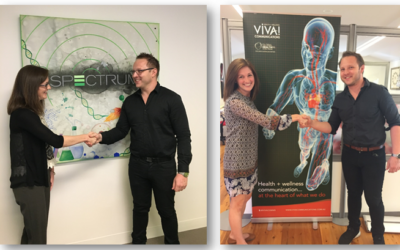
GHPR Employee Exchange: Diverse Markets, Distinct Cultures, One Network
Recently, partners from around the world gathered to learn, share and connect during the 2017 GLOBALHealthPR® (GHPR) Annual General Meeting, held in Mexico City. One of the unique aspects we discussed in Mexico is the annual GHPR employee exchange program. We recently interviewed the participants of this year’s program to bring you a look back at the highlights:
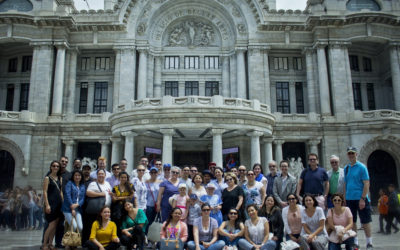
The Weakest Link: Why specialised networks are essential in healthcare communications
Every year GLOBALHealthPR agencies come together for our Annual General Meeting, AGM for short, and it’s a celebrated event! Months in advance partners start circling the dates on calendars, eagerly anticipating the opportunity to learn, share and connect. This past...
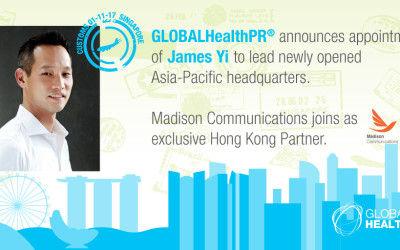
GLOBALHealthPR starts 2017 with expansion of Asia-Pacific footprint and capabilities
NEW YORK, 11 January 2017 – GLOBALHealthPR®, the largest independent health and science communications agency partnership worldwide, has announced the opening of its new Asia-Pacific headquarters, located in Singapore’s Central Business District. The new office is opening under the direction of James Yi, the newly appointed Executive Director, APAC. It also follows the recent addition of Madison Communications as GLOBALHealthPR’s exclusive partner in Hong Kong, allowing the network to more closely support emerging client needs in the region.
Communication Trends for 2017
Despite being somewhat averse to speculation, Guess What’s editorial board asked me to write about trends for 2017. I leave here my 12 guesses.

The 2016 GLOBALHealthPR Holiday Cookbook
Here at GLOBALHealthPR, we go to all ends of the earth to deliver our clients recipes for successful global and regional communications programmes. With offices in more than 40 countries, we know how to find the right mix of local insights and ingredients in order satisfy the unique tastes and needs of each programme.
In the spirit of the holiday season, we’re sharing some of the traditional recipes that are enjoyed in our local markets around this time of the year, delivered by our expert agency partners. Bon Appetite!

#GHPRCONNECTS: REFLECTIONS ON WORKING IN HEALTH + WELLNESS PR IN SYDNEY
I’ve been in Sydney, Australia for just over a week now as a part of the GLOBALHealthPR® Professional Exchange Program. While I’ve done “heaps” of touristy things like check out sweeping views of the city from the Sydney Tower Eye, watched surfers catch some waves at Manly Beach and hung out with koalas at the Wild Life Sydney Zoo, I’ve also gotten a taste of what it’s like to live as a local Aussie. Here are a few things about working with colleagues at our partner agency Team VIVA! that I wanted to share: